Monday, September 10, 2012

Friday, September 7, 2012
Thursday, September 6, 2012
Initial thoughts about educational disruption
There are three parts to it. The first has to do with the disintermediation of schools from the lecturing and teaching that goes into a lecture class, so that the best classes can be recorded and replayed around the world over and over. It means that we don't have to put up with mediocre lessons about any subject as soon as a good lesson on that subject has been given. And it means that there is going to be an inexorable move from live lectures to recorded ones, not only because the cost savings will make it compelling, but because the quality will actually go up.
The second has to do with the quantification of teaching into bite-sized, Khan-Academy formatted lessons. This will have the impact on classes that the palletization of goods, the shipping containerization of trade, and the digitizing and standard IP packetization of data had on the transfer of data. As soon as that standard sized lesson takes over, it will standardize (and erode) the variability of teaching styles. Maybe people will still hold on to longer form lessons, just as there is still music that is written that doesn't fall into the standard 3 minute pop song format. But what percentage of the songs and music are not that length? Not much. What percentage of phone calls are analog? Not many. And what percentage of goods are not shipped via pallets and shipping containers? Not much, particularly in comparison to what is sent that way. Other goods are sent via other means, but they are usually luxury goods or bulk raw materials. Fair enough -- there will always be a market for the bespoke suit, the hand-made car, the original painting, and the private school education, but that will become the purview of the 1%, and that's not really where I think we should all aspire to be.
The third part is the impact these two forces will have on education. These forces will result in an inexorable squeezing of the standard model of education into a new model. Much of the classroom time will be the result of "flipped" homework and class assignments. Students will watch videos and listen to lectures and see sample problems worked out at home. They might blog about their questions or other observations they gleaned from the lecture as a way to take notes and stay engaged with the matierial as it is being presented. Then, when it comes to actually following through on what they've learned -- that will happen in class where there can be interaction and feedback and getting questions answered (although the class could post questions and have them answered, as a way to earn karma points for extra credit). The focus will be better in class on the kinds of problems or writing that they need to master, partly because everyone will be working on the same kinds of tasks (peer pressure) and partially because there will be fewer distractions of the kinds that kids have at home or each other's houses.
From there it is only a small step to a virtual model of classes, which will allow students and teachers to find times to meet via videochat in order to find times that work for everyone. I don't know how to resolve the cheating issues, except to say that at some point the potential employees or students need to be held accountable, and while it will bear a passing resemblance to virtual study hall, it is clear to me that there is probably a way of doing this.
http://www.quickanded.com/2012/09/the-curious-birth-of-the-credit-hour.html
Wednesday, September 5, 2012
Thought experiment about disintermediating education
There will be a post here, probably tomorrow, about the process underway that is disintermediating education from schools back to people. The combination of online courses offered from excellent schools:
http://chronicle.com/article/Teaching-to-the-World-From/134068/
along with the atomization of particular lessons via Khan Academy
http://www.khanacademy.org/
has the potential to disrupt the education marketplace, as foretold by Clayton Christensen in
Disrupting Class
More to follow tonight, and it may end up being in three parts over the next few nights. I'm not sure.
Monday, September 3, 2012
Thursday, August 23, 2012
Wednesday, August 22, 2012
Monday, August 20, 2012
Sunday, August 19, 2012
A good place to work
In good organizations, people can focus on their work and have confidence that if they get their work done, good things will happen for both the company and them personally. It is a true pleasure to work in an organization such as this. Every person can wake up knowing that the work they do will be efficient, effective and make a difference both for the organization and themselves. These things make their jobs both motivating and fulfilling.
http://bhorowitz.com/2012/08/18/a-good-place-to-work/
Doesn't seem like too much to ask . . .
Friday, August 17, 2012
Thursday, August 16, 2012

Saturday, August 11, 2012
Wednesday, August 8, 2012
Wednesday, August 1, 2012
Tuesday, July 31, 2012
Monday, July 30, 2012
A Working Assault Rifle Made With a 3-D Printer

I have mixed feelings about this, too. On the one hand, the Rep-Rap world is wonderful, but I wasn't expecting this to happen as quickly as it did, i.e. before we had any sort of systems in place to control it. Moore's Law takes everyone by surprise sooner or later, I guess.
via Popsci.com
Sight
Sight from Sight Systems on Vimeo.
What a world will look like with Google Glass -- I have mixed feelings about this: it looks so cool that I almost can't resist, but it would make me less connected in the ways I know really matter.
Tuesday, July 24, 2012
Project Management Template from the Military
Our tax dollars at work. Very cool.
http://kkovacs.eu/free-project-management-template-mil-std-498
http://kkovacs.eu/free-project-management-template-mil-std-498
Shadows in the Woods

http://www.amazon.co.uk/gp/aw/d/B0006443P8?m=A6VLL9VL7SDVJ
Recent updates in the Prisoner's Dilemma
http://bosker.wordpress.com/2012/07/23/the-prisoners-dilemma/
Monday, July 23, 2012
Thursday, July 19, 2012
Quote of the Day -- Old Proverb
It is very difficult to find a black cat in a dark room. Especially when there is no cat.
quoted in Stuart Firestein's Ignorance
Tuesday, July 17, 2012

Quote of the Day -- John Maynard Keynes

-- John Maynard Keynes in The General Theory
via James Fallows at the Atlantic
Monday, July 16, 2012
Rethinking recycling
The dismal science of economics has a dim view of recycling as currently done in the US, according to the NYTimes.
Friday, July 13, 2012
The Line
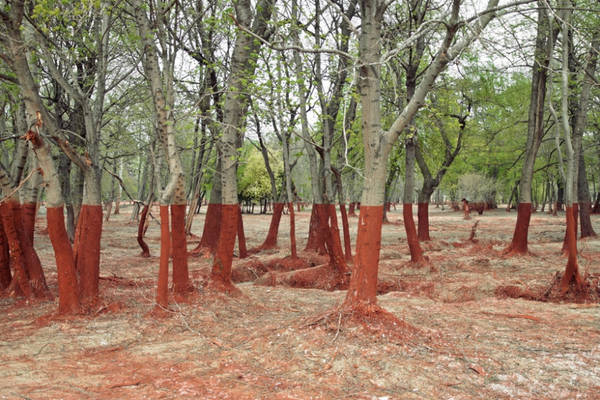
From a photo taken at the high-tide line of an aluminum spill from a chemical factory. It reminds me of the aftermath of the Mount St. Helens eruption in Washington.
via boingboing
From Bench to Bunker - The Chronicle Review - The Chronicle of Higher Education
In a small, anonymous office in the Trump Tower, 28 floors above Wall Street, a man sits in front of a computer screen sifting through satellite images of a foreign desert. The images depict a vast, sandy emptiness, marked every so often by dunes and hills. He is searching for man-made structures: houses, compounds, airfields, any sign of civilization that might be visible from the sky. The images flash at a rate of 20 per second, so fast that before he can truly perceive the details of each landscape, it is gone. He pushes no buttons, takes no notes. His performance is near perfect.
http://chronicle.com/article/From-Bench-to-Bunker-/132743/
Saturday, July 7, 2012
Thursday, July 5, 2012
The "Me" Half-Century op/ed from NYTimes
Going forward, the youthful masses of every age would be permitted as never before to indulge their self-expressive and hedonistic impulses. But capitalists in return would be unshackled as well, free to indulge their own animal spirits with fewer and fewer fetters in the forms of regulation, taxes or social opprobrium.
http://www.nytimes.com/2012/07/04/opinion/the-downside-of-liberty.html?smid=pl-share
Tuesday, July 3, 2012
The problem with stack-ranking
Eichenwald’s conversations reveal that a management system known as “stack ranking”—a program that forces every unit to declare a certain percentage of employees as top performers, good performers, average, and poor—effectively crippled Microsoft’s ability to innovate. “Every current and former Microsoft employee I interviewed—every one—cited stack ranking as the most destructive process inside of Microsoft, something that drove out untold numbers of employees,” Eichenwald writes. “If you were on a team of 10 people, you walked in the first day knowing that, no matter how good everyone was, 2 people were going to get a great review, 7 were going to get mediocre reviews, and 1 was going to get a terrible review,” says a former software developer. “It leads to employees focusing on competing with each other rather than competing with other companies.”
From a Vanity Fair article about Microsoft's "lost decade." I think Jack Welch was famous for doing the same thing at GE. It also explains why grading on a curve in a school is not always a good idea, and reminds me of the old joke about the two campers and the bear.
From a Vanity Fair article about Microsoft's "lost decade." I think Jack Welch was famous for doing the same thing at GE. It also explains why grading on a curve in a school is not always a good idea, and reminds me of the old joke about the two campers and the bear.
Monday, July 2, 2012

Roshambo (rock-paper-scissors, not the other one) Robot with 100% winning rate
Friday, June 29, 2012
Simple made easy
http://www.infoq.com/presentations/Simple-Made-Easy
It does reiterate the point that simple is not the same thing as easy -- simple can be hard.
It does reiterate the point that simple is not the same thing as easy -- simple can be hard.
Wednesday, June 27, 2012
Quote of the day -- George Bernard Shaw
The power of accurate observation is commonly called cynicism by those who have not got it.
Irish dramatist & socialist (1856 - 1950)
Monday, June 25, 2012
Shakespeare Hokey-Pokey
O proud left foot, that ventures quick within
Then soon upon a backward journey lithe.
Anon, once more the gesture, then begin:
Command sinistral pedestal to writhe.
Commence thou then the fervid Hokey-Poke,
A mad gyration, hips in wanton swirl.
To spin! A wilde release from Heavens yoke.
Blessed dervish! Surely canst go, girl.
The Hoke, the poke -- banish now thy doubt
Verily, I say, 'tis what it's all about.
-- by "William Shakespeare"
Written by Jeff Brechlin, Potomac Falls, Maryland, and submitted by Katherine St. John.
The poem is from the Washington Post Style Invitational contest that asked readers to submit "instructions" for something (anything), but written in the style of a famous person. The winning entry was The Hokey Pokey (as written by William Shakespeare).
via http://www.phantomranch.net/folkdanc/articles/hokeypokey.htm
Wednesday, June 20, 2012
Awesome HD Slinky Slow-Mo
The explanation that "it takes time for the bottom of the slinky to feel the change" might work ok, but it isn't the best.Then why doesn't the bottom of the slinky fall as the top is let go? I think the best thing is to think of the slinky as a system. When it is let get, the center of mass certainly accelerates downward (like any falling object). However, at the same time, the slinky (spring) is compressing to its relaxed length. This means that top and bottom are accelerating towards the center of mass of the slinky at the same time the center of mass is accelerating downward.
(via @stevenstrogatz)
Tuesday, June 19, 2012
Quote of the Day -- James Dyson
I've always thought that schoolchildren should be marked by the number of failures they've had. The child who tries strange things and experiences lots of failures to get there is probably more creative.
The interview is in two parts:
http://www.fastcompany.com/magazine/115/open_next-design.html
http://www.fastcompany.com/articles/2007/04/next-design-extra.html
Sunday, June 10, 2012
Thursday, June 7, 2012
John Carmack is making a Virtual Reality headset
I don't know whether it will work or not, but if anyone can do it, John Carmack can.
Quote of the Day -- T. H. White
The wizard Merlin finds the young King Arthur gazing mournfully into a fishpond, on the verge of succumbing to the temptation of self-pity.
"The best thing for being sad," Merlin says, "is to learn something. That is the only thing that never fails. You may grow old and trembling in your anatomies, you may lie awake at night listening to the disorder of your veins, you may miss your only love, you may see the world about you devastated by evil lunatics, or know your honour trampled in the sewers of baser minds. There is only one thing for it then—to learn. Learn why the world wags and what wags it. That is the only thing which the mind can never be tortured by, never fear or distrust, and never dream of regretting."
T. H. White, The Once and Future King
Wednesday, June 6, 2012

Sunday, June 3, 2012
Saturday, June 2, 2012
In U.S., 46% Hold Creationist View of Human Origins

From Gallup:
PRINCETON, NJ -- Forty-six percent of Americans believe in the creationist view that God created humans in their present form at one time within the last 10,000 years. The prevalence of this creationist view of the origin of humans is essentially unchanged from 30 years ago, when Gallup first asked the question. About a third of Americans believe that humans evolved, but with God's guidance; 15% say humans evolved, but that God had no part in the process.

Friday, June 1, 2012
Yale Blue Book to be published for one more year at least
http://www.yaledailynews.com/news/2012/apr/26/blue-book-returns-for-now/
Marina Keegan: The Opposite of Loneliness

Wednesday, May 30, 2012
Tuesday, May 29, 2012
Monday, May 28, 2012
Man, stranded in the desert, makes a motorcycle out of his broken car
While traveling through the desert somewhere in north west Africa in his
Citroen 2CV , [Emile] is stopped, and told not to go any further due to
some military conflicts in the area. Not wanting to actually listen to
this advice, he decides to loop around, through the desert, to circumvent
this roadblock.
After a while of treading off the beaten path, [Emile] manages to snap a
swing arm on his vehicle, leaving him stranded. He decided that the best
course of action was to disassemble his vehicle and construct a motorcycle
from the parts. This feat would be impressive on its own, but remember,
he's still in the desert and un-prepared. If we're reading this
correctly, he managed to drill holes by bending metal and sawing at it,
then un-bending it to be flat again.
It takes him twelve days to construct this thing.
You got the translation right, but there's not just a swing arm that's
broken, there's a frame beam broken too (not sure about the exact term,
one of the 2 girder of the chassis).
He's not far away but he has a lot of tools and other hardware that
could be stolen if he leaves them unattended.
http://hackaday.com/2012/05/21/man-stranded-in-the-desert-makes-a-motorcycle-from-his-broken-car/
Sunday, May 27, 2012
Tuesday, May 22, 2012
Monday, May 21, 2012
StayFocusd

Saturday, May 19, 2012
Thursday, May 17, 2012

Wednesday, May 16, 2012
Panopticon -- The newest in dormitory architecture

The trusses and the skylights look like something much more modern.
Friday, May 11, 2012
Quote of the day - Socrates
"Our youth now love luxury. They have bad manners, contempt for
authority; they show disrespect for their elders and love chatter in place
of exercise; they no longer rise when elders enter the room; they
contradict their parents, chatter before company; gobble up their food and
tyrannize their teachers."�
authority; they show disrespect for their elders and love chatter in place
of exercise; they no longer rise when elders enter the room; they
contradict their parents, chatter before company; gobble up their food and
tyrannize their teachers."�
Wednesday, May 9, 2012
Hulk reviews Ruffalo's Hulk
Very funny article from The New Yorker where Hulk is a movie critic.
http://www.newyorker.com/online/blogs/culture/2012/05/the-hulk-on-mark-ruffalos-hulk.html?currentPage=all
http://www.newyorker.com/online/blogs/culture/2012/05/the-hulk-on-mark-ruffalos-hulk.html?currentPage=all
Tuesday, May 8, 2012
Maurice Sendak Story
Quote from "Where the Wild Things Are" --
"Oh, please don't go—we'll eat you up—we love you so!"�
―� [ http://www.goodreads.com/author/show/4489.Maurice_Sendak ]Maurice
Sendak,� [ http://www.goodreads.com/work/quotes/3020535 ]Where the Wild
Things Are
"Once a little boy sent me a charming card with a little drawing on it.
I loved it. I answer all my children's letters — sometimes very
hastily — but this one I lingered over. I sent him a card and I drew a
picture of a Wild Thing on it. I wrote, 'Dear Jim: I loved your card.'
Then I got a letter back from his mother and she said, 'Jim loved your
card so much he ate it.' That to me was one of the highest compliments
I've ever received. He didn't care that it was an original Maurice
Sendak drawing or anything. He saw it, he loved it, he ate it."
Douglas Allen
Director of Planned Giving
Westminster School
phone: 860.408.3027
fax: 860.408.3044
http://www.westminster-school.org
Monday, May 7, 2012

Quote of the day -- Nicholas Carr
To put it a different way, the sharecroppers operate happily in an attention economy while their overseers operate happily in a cash economy.
Friday, May 4, 2012
Thursday, May 3, 2012
Quote of the day -- Mark Twain
Travel is fatal to prejudice, bigotry, and narrow-mindedness, and many of our people need it sorely on these accounts. Broad, wholesome, charitable views of men and things cannot be acquired by vegetating in one little corner of the earth all one's lifetime.
- Innocents Abroad
- Innocents Abroad
Thursday, April 26, 2012

Wednesday, April 25, 2012
2012 JEFFERSON LECTURER Wendell E. Berry Lecture “It All Turns On Affection”
http://www.neh.gov/about/awards/jefferson-lecture/wendell-e-berry-lecture
Efficiency vs. Resilience -- An analogy based on an essay by Chip Ward

http://www.tomdispatch.com/post/174826/chip_ward_how_efficiency_maximizes_catastrophe
A long academic essay by Chip Ward on the tradeoffs between efficiency and resilience within natural systems. The thesis is that decisions that maximize efficiency in the short term often create fragile systems that collapse catastrophically when the unexpected inevitably occurs in the long term.
To explicitly recast this thesis (which I agree with) into the world of organizations and management, an organization can decide to streamline procedures so that they involve fewer people and are more efficient.
However, that same decision can erode the organization's ability to respond creatively and organically when something unexpected happens that requires experienced and thoughtful decision-making at a lower administrative level.
In addition, and this was not a point made in the article, this same process dramatically reduces the number of people who are experienced and seasoned enough to step into the smaller number of decision-making roles.

Tuesday, April 24, 2012
Books for kids
67 books to read to your kids before they're 10.
I have a long way to go, but I've read some of them.
I have a long way to go, but I've read some of them.
Monday, April 23, 2012
Wednesday, April 18, 2012
Part of me doesn't care whether this is true or not
Rockets.
Rockets!
ROCKETS!
And, did I mention Rockets?
Let's build stuff and shoot it into space.
Tuesday, April 17, 2012
NYTimes: Argentina to Seize Control of Oil Company
"The expropriation would reassert state control over a pillar of Argentina's economy but also increase diplomatic tensions with Spain and the European Union."
I kept looking for the quote from Francisco d'Anconia.
I kept looking for the quote from Francisco d'Anconia.
Monday, April 16, 2012
NIce summary on the substance of usage arguments
Language usage is and should be a battleground. Our task is to make the
conflict fruitful. To do this, we need to understand what precisely is
at issue in any particular dispute. Does a new locution advance or
retard our power to express our ideas effectively? Is the issue
primarily one of different aesthetic sensibilities? Or is our argument
over language rooted in deeper disagreements over who we are and how we
should live? Once we understand what is really at stake, we may be able
to learn much through arguing about language.
http://opinionator.blogs.nytimes.com/2012/04/15/arguing-about-language/?pagewanted=all
Friday, April 13, 2012
Atlantic Facebook Article
Is Facebook making us lonely? Probably.
http://www.theatlantic.com/magazine/archive/2012/05/is-facebook-making-us-lonely/8930/
Monday, April 9, 2012
Tuesday, April 3, 2012
Writing advice from C.S. Lewis
From Letters of Note --
1. Always try to use the language so as to make quite clear what you mean
and make sure your sentence couldn't mean anything else.
2. Always prefer the plain direct word to the long, vague one.
Don't implement promises, but keep them.
3. Never use abstract nouns when concrete ones will do. If you mean "More
people died" don't say "Mortality rose."
4. In writing. Don't use adjectives which merely tell us how you want us
to feel about the thing you are describing. I mean, instead of telling
us a thing was "terrible," describe it so that we'll be terrified. Don't
say it was "delightful"; make us say "delightful" when we've read the
description. You see, all those words (horrifying, wonderful, hideous,
exquisite) are only like saying to your readers, "Please will you do my
job for me." [emphasis added -- DHA]
5. Don't use words too big for the subject. Don't say "infinitely" when
you mean "very"; otherwise you'll have no word left when you want to talk
about something really infinite.
Monday, April 2, 2012
Subscribe to:
Posts (Atom)

 Posts

